Do Not Start The Engine After A Flood — The Hydrolock That Turns This Into A Car Towing Job
Water cannot be compressed. One simple line of science, but that is exactly why a car that sat in floodwater can end up as scrap over a single turn of the key.
An engine works by compressing air inside the cylinder. If water has come in through the air intake and is sitting in the combustion chamber, the piston on its way up has to compress a liquid that will not compress at all. What gives way is not the water — it is the connecting rod, the piston, or the engine block itself. That is hydrolock.
The part most people miss: the engine does not need to be running for you to wreck it. The starter motor alone is strong enough to bend a rod. A short click and then the engine feels solid — by that point the damage may already be done.
Turning the key also wakes up the electrical system on a car that is still wet. Soaked wiring shorts, and ECU damage usually costs more than the engine work — the kind that shows up days later as ghost faults.
So the rule is short: if the water ever rose past the cabin floor or the wheel hubs, do not turn the key until the car has been inspected. Not to move it somewhere dry, not to check whether the radio still works.
- Do not turn the key, do not press the start button, do not crank it even for a second
- Do not operate the electric windows or the sunroof
- Do not try to drive out of water that is still moving
- Do not charge or jump start a car that is still wet
First Steps Once The Water Drops — Before You Call Roadside Assistance Or A Tow Truck
Safety first, evidence second, the car third. That order does not change even if the car is only three months old.
Do not walk into moving water to save a vehicle. Knee-deep water is enough to take an adult off their feet, and urban floodwater carries sewage, scrap metal and sometimes live cables. Cars can be replaced.
Once the water has genuinely receded and the ground is safe to stand on, work through this order:
- Check for downed wires or a gas smell before you go anywhere near the vehicle.
- Photograph the car from all four corners before you touch anything — the untouched state is your strongest evidence.
- Record the water level — find the dirt line on the door or on a wall nearby, and take a close-up shot with something for scale.
- Photograph the water line inside the cabin too — on the seat cushions, under the dashboard, and on the carpet.
- Take one continuous walk-around video while saying the date, the time and the location out loud — worth far more than ten still photos.
- Open the bonnet. If the battery can be reached safely, disconnect the negative terminal first (black cable), then the positive.
- Do not do step 6 on an EV or a hybrid — the reason is in the section below.
- Remove personal belongings, documents and child seats. A child seat that has been submerged cannot be reused.
- Leave the doors open so air can move through, if the weather has turned dry.
- Note down your policy number, the time it happened and the exact location in your phone notes.
Signs Water Got Into The Engine, Gearbox, ECU And Cabin — When The Car Must Be Towed
A car can look perfectly fine from the outside and still have taken on water in all the wrong places. Every check below can be done yourself without switching anything on.
The most important one is the air filter. Open the filter box and look at the element inside. If it is wet, muddy, or shows a water line — water reached the air intake, and the path from there leads straight into the engine. That car does not get started, full stop.
Second, pull the engine oil dipstick. Oil mixed with water turns the colour of milky coffee, and the level reads above the full mark because the water adds volume.
The rest is eyework. Keep one thing in mind while you check: a lot of electronic modules sit in the lowest parts of the car — under the seats, under the carpet, in the passenger footwell. Any single sign on the list below is enough to stop and arrange a tow truck instead.
- Air filter wet or muddy — do not start it, arrange car towing straight away
- Engine oil the colour of milky coffee, or reading above the full mark
- Automatic gearbox fluid turned pale pink and frothy
- Carpet and the padding under the seats soaked — meaning electronic modules are involved
- Condensation trapped inside the headlights, the instrument cluster or the tail lights
- Seatbelt webbing wet all the way when pulled out fully — a good read on the cabin water level
- A damp sour smell, and fine silt in the door channels and under the spare tyre
EVs And Hybrids After A Flood — Safety Steps Before Any Towing Service Arrives
EVs and hybrids carry one extra risk that a petrol car does not: a high-voltage battery pack sitting under the floor — the lowest part of the car, and the first part to go under.
Water, especially salt or brackish water near the coast and river mouths, can create a conductive path inside the pack. The dangerous part is the timing — an affected pack can heat up and catch fire hours, even days, after the water has gone.
That is why the steps for an EV or hybrid are different. Do not disconnect the battery, do not touch the orange cables, do not open the high-voltage service covers, do not charge it, and do not power up the system just to see if it still works. If you hear hissing, see smoke, or smell anything oddly sweet from underneath — back well away and call the fire brigade.
Until a technician has inspected it, an EV or hybrid that has been submerged should be parked in the open, away from the house, the garage and other vehicles.
One more reason an EV belongs on a flatbed: the electric motor is coupled directly to the wheels. If the wheels turn while it is being towed, the motor acts as a generator and re-energises the high-voltage circuit — the last thing you want in a system that is still wet.
Moving A Flooded Car Without Starting It — Winching And Flatbed Towing
A car that cannot be started is not a car that cannot be moved. It just means it has to be lifted, not driven.
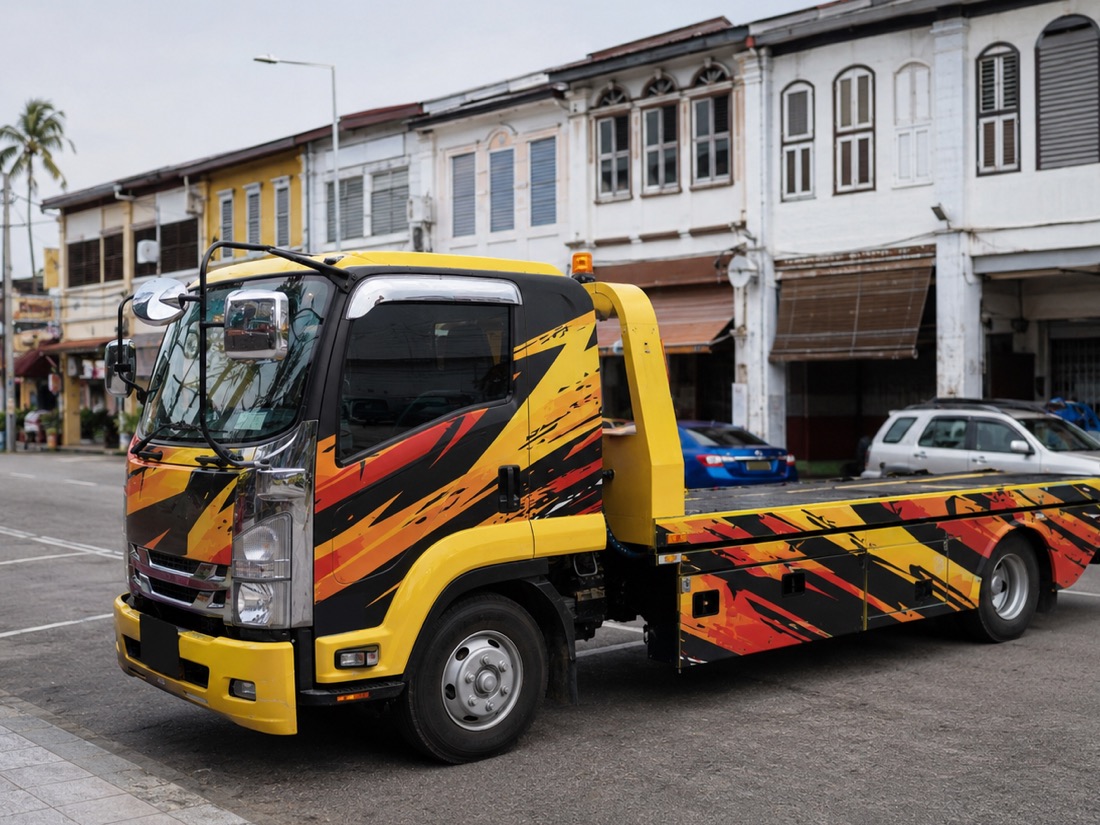
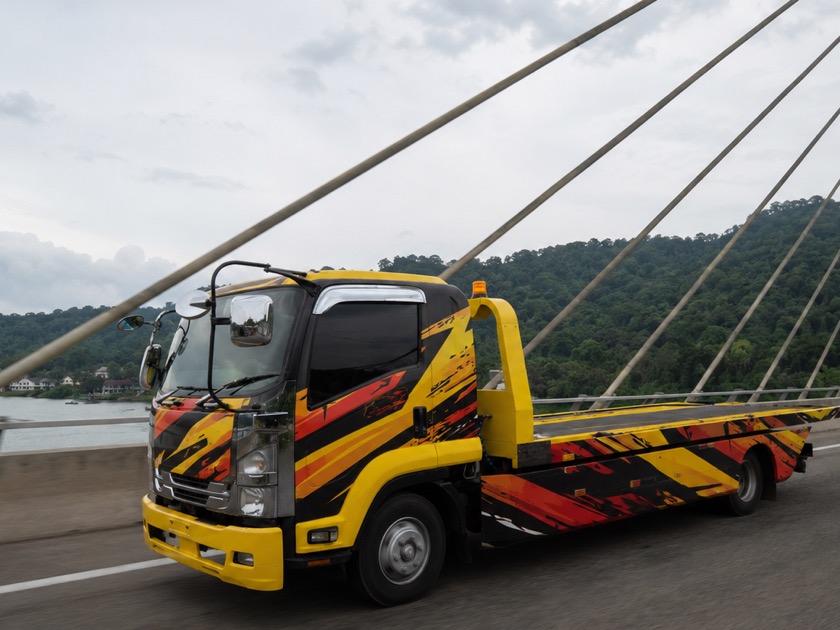
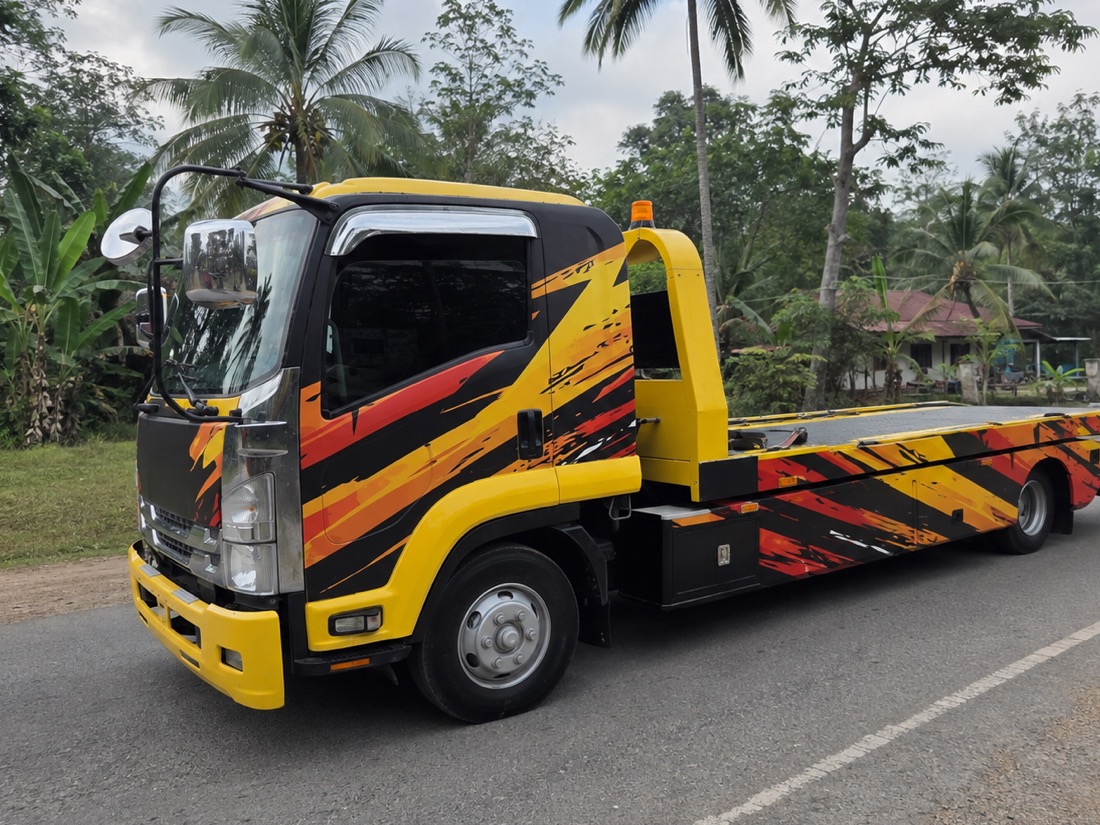
The safest method for flood cases is a flatbed. The platform tilts down, the car is winched up with the engine never switched on, and all four wheels sit on the deck for the whole trip — no driven components spinning, no gearbox turning without lubrication.
Flood cars are often more than a straight lift — they are recovery work. The vehicle might be bogged in mud, down in a drain, or wedged in a basement car park. Situations like that need winching, and sometimes wheel skates if the wheels have locked up.
There are technical obstacles most owners never see coming: the steering lock stays engaged when the key is not turned, an electronic parking brake cannot be released without power, and an automatic gearbox cannot be shifted into neutral. That is why the details matter upfront — so the right unit is sent the first time.
For cost reference, our distance tiers start from RM250 for deliveries under 50 km, from RM450 for under 100 km, and from RM550 for under 150 km. For heavy vehicles, lorry towing is priced by tonnage class starting at the 5-ton, 10-ton and 15-ton units. Winching and recovery work is quoted separately, and if the workshop you want is across a state line, interstate towing is arranged the same way.
The east coast monsoon season is the busiest stretch for this kind of work. If you live in an area that floods often, save the Terengganu tow truck coverage page early so you are not scrambling for a number the moment the water drops.
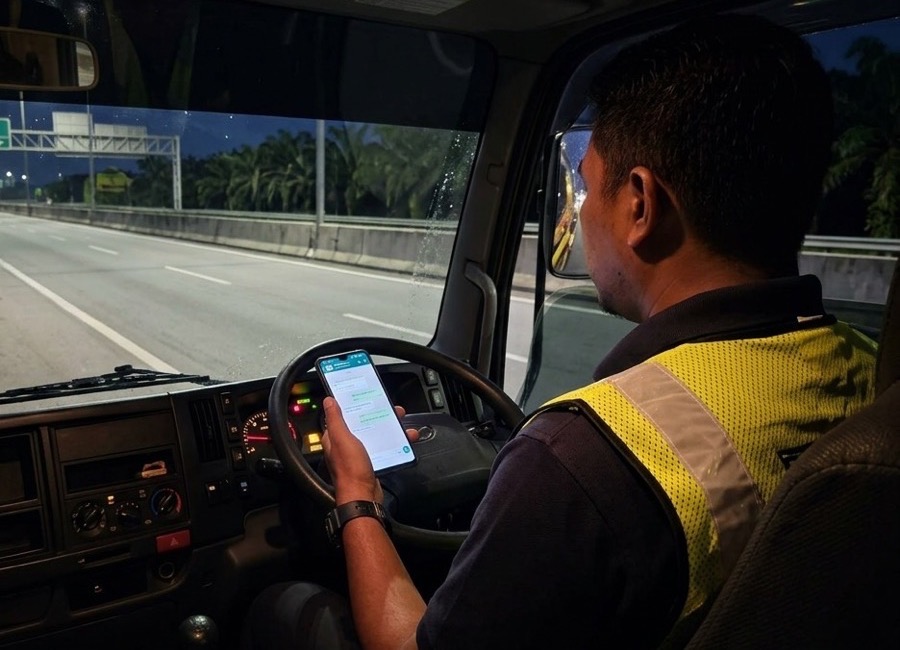
Stranded with a car that has already been submerged? WhatsApp Abang Tow — send your live location, the vehicle type, the highest water level, and whether anyone has tried to start it. The price is confirmed in chat first, then the unit rolls.
When you book, mention these details so the operator brings the right equipment from the start:
- Vehicle type — petrol, diesel, automatic, manual, EV or hybrid
- Highest water level (below the door, floor level, seat cushion level, dashboard level)
- Whether anyone has tried to start the car since the flood
- Wheel condition — still rolling freely, or locked up
- The surface the car is standing on — tarmac, mud, grass, a drain or a basement
- Access clearance for the tow truck or lori to get in, including the height of the car park entrance
- The destination you want — your own workshop, the panel workshop, or home first
Before The Workshop Or Assessor Arrives — Have Your Evidence Ready Once The Towing Is Done
A flood car assessment turns on two things: how high the water rose, and whether the engine was ever cranked. Both are settled by the evidence you kept, not by the story you tell.
That is why you should not wash or dry out the interior before it has been assessed. A carpet scrubbed clean wipes out the water line — the clearest proof of how bad the damage really is. Take your belongings out, yes. Do a full clean-up, no.
One more common source of dispute: whoever comes to look at it may try to crank the engine as a test. Tell them in writing, upfront, that the car has not been started since the flood, and keep that message. Before the assessment, put together a simple digital folder on your phone:
- Photos of all four corners of the car in its original state after the water dropped
- Close-ups of the water line on the doors, the tyres, the seats and the carpet
- The walk-around video with the date, time and location spoken out loud
- Photos of the air filter, the engine oil dipstick and the gearbox fluid
- Wider shots showing the general flood level — fences, poles, nearby shops
- The reference or job number for the towing work, and the delivery receipt
The Short Version — Do Not Turn The Key, Arrange 24/7 Towing Instead
Flood cover is not something every policy automatically includes — on most policies it is a natural disaster add-on that has to be attached at renewal. The towing portion has its own conditions too: distance caps, destination limits and a cap on how often you can use it. If you are not sure what you have, read our guide to using your insurance towing benefit.
Flood jobs also rarely fall under ordinary roadside assistance. Pulling a vehicle out of water, mud or a drain counts as recovery work, so do not be surprised if the panel hotline tells you it is outside their scope. For the full picture of how the process runs, we have a separate reference on flood damaged car recovery.
The decisions you make in that first hour — do not turn the key, record the evidence, move the car lifted rather than driven — are what decide whether you are facing a clean-up job or an engine that has to come apart.
Need the car moved right now without risking the engine? WhatsApp Abang Tow — one message with your live location and a photo of the water line is enough for us to know which unit to send. Do not have the number saved yet? Save Abang Tow 24/7 towing service now — car towing, motorcycle towing and lorry towing, across all 13 states of Peninsular Malaysia.