The First 60 Seconds When Your Car Loses Power — Before You Think About Towing
The engine stutters, the whole instrument cluster lights up at once, and suddenly the accelerator means nothing. At 110 km/h, that is the most dangerous moment of the entire breakdown — not the wait for the tow truck later.
Two things change immediately when the engine dies: the steering goes heavy because the power steering loses assistance, and the brakes lose servo assistance. The brakes still bite, but you have to push far harder than usual. A lot of drivers panic here because they think the brakes have failed. They have not — they are just heavy.
Momentum is your friend. Do not scrub off speed suddenly; use whatever speed you have left to move left.
- Do not brake hard. The car behind you is not expecting you to slow down that abruptly.
- Hit the hazard lights straight away — that is your first signal to the traffic behind.
- Two hands on the wheel and breathe. It is heavy, but it still turns.
- Signal left and move over one lane at a time. Never cut across two lanes at once.
- Aim for a straight, open shoulder. If a lay-by, an exit ramp, a toll plaza or an R&R is just ahead and you still have momentum, keep rolling to it — far safer than stopping beside the fast lane.
- Once stopped: handbrake on, gear in P (auto) or 1st (manual), wheels turned slightly to the left.
- Read the nearest kilometre marker and your direction of travel (northbound or southbound). Type it into your phone now, before you forget.
How To Stop On The Emergency Lane Before The Tow Truck Arrives
The emergency lane is not a parking bay — it is a running lane for ambulances, fire units and highway patrol. That is exactly why your position matters.
Stop as far left as you can. If there is room, let the left wheels ride slightly onto the gravel or grass so the body of the car sits further away from the fast lane. Every extra metre between your car and moving traffic is another metre of safety margin.
Do not stop right after a bend, on a bridge, inside a tunnel, or at the mouth of an entry or exit ramp. In those spots the driver behind only sees you at the last second. If the car can still coast a few hundred metres to a straight, open stretch, keep going — visibility is worth more than stopping early.
Turn the wheels to the left for one practical reason: if you get rear-ended, the car is pushed left, away from the traffic lanes instead of back into them.
At night or in rain, switch on the parking lights along with the hazards. A dark car on the shoulder at 3 in the morning is almost invisible until far too close.
Warning Triangle, Hazards & Where To Wait — Roadside Assistance Basics
Once the car is safely stopped, get everybody out. This is the part people most often get wrong: most drivers choose to sit inside the car while waiting for roadside assistance to arrive. A car stopped on a highway shoulder is the highest-risk target for a rear-end hit, and the worst place to be at that moment is inside it.
Everyone exits through the left-hand doors only. Climb behind the guardrail or up the embankment, then walk back several dozen metres behind the car. Do not stand in front of it or directly behind the bumper — if the car gets hit, that is exactly where it travels.
For the warning triangle: place it roughly 50 metres back, and further still if you stopped after a bend or over the crest of a hill. Carry it while facing oncoming traffic so you can always see what is coming. If the shoulder is narrow, the traffic is fast, or it is pouring rain — skip it. Your own safety beats procedure; hazards plus parking lights are enough of a warning.
- Take out with you: phone, power bank, drinking water, car keys, documents (licence, grant, insurance certificate).
- Wear anything bright or reflective if you have it in the car.
- Move children and elderly passengers first, straight behind the guardrail.
- Do not change a tyre if the damaged wheel is on the right-hand side — you would be working with your back to the fast lane.
- Do not walk along the shoulder looking for help. Stay in one safe spot and let the unit come and find you.
- Snap a photo of the nearest kilometre marker — after live location, it is the most exact proof of where you are.
Highway Concession Hotline vs Private Towing Service — Which One To Use
This is the part that confuses people most, and the answer hinges on one thing: are you still inside the tolled stretch, or have you already exited?
For as long as you are between the entry toll plaza and the exit toll plaza, that area is under the control of the highway concessionaire. Their appointed tow operators have priority to work in there. Private tow trucks generally are not allowed to roam freely inside the tolled zone — so your first call has to go to the concession.
The assistance number is printed on the roadside signage, on the back of the toll ticket, and inside the concessionaire's official app. On the PLUS network, the PLUSLine customer line 1-800-88-0000 is the usual entry point — but whatever number is printed on the signage along the stretch you are on is the most accurate one. Save it now, not after it happens.
When you call, they will usually send a patrol unit for basic help first — jump start, radiator water, tyre trouble. If the vehicle genuinely cannot move, their tow unit pulls you out of the highway zone to a designated point. Ask on the call itself: where exactly will the vehicle be dropped, and is there any charge for that leg.
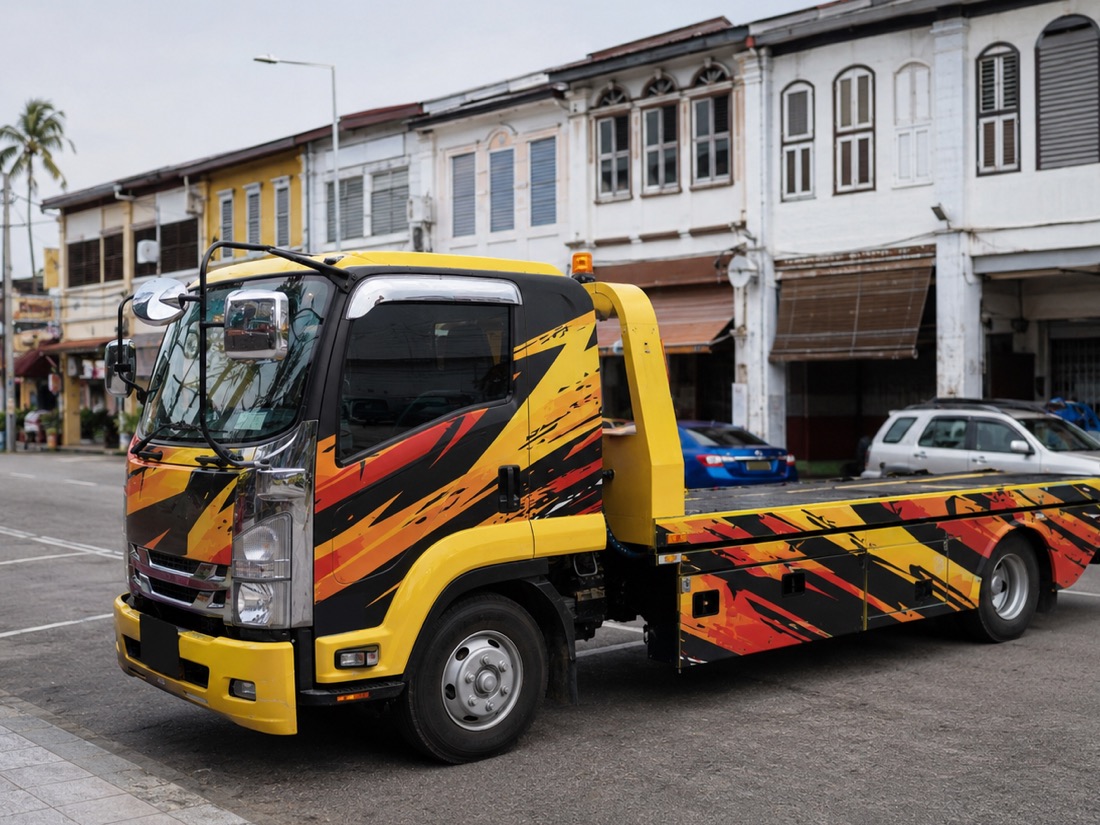
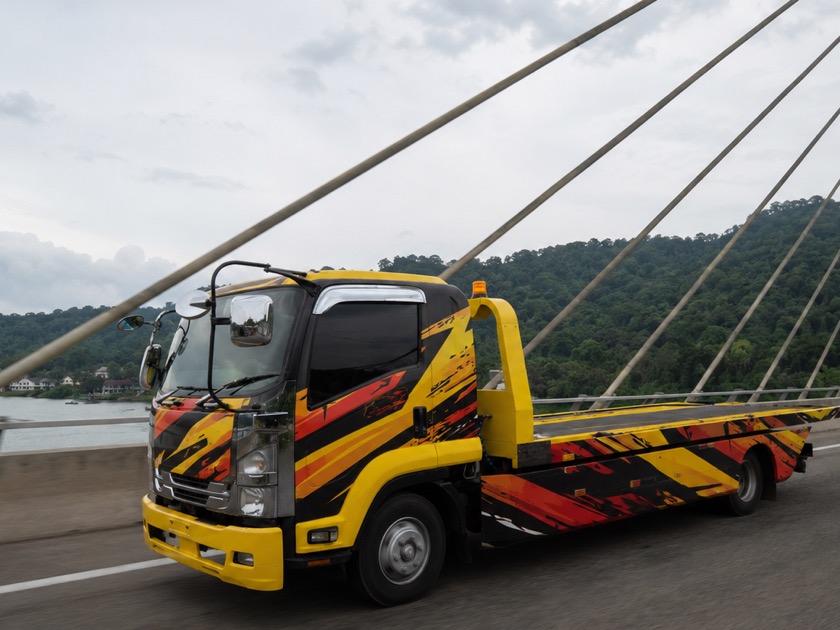
This is where a private towing service comes in. A private operator like Abang Tow starts from the point where you were dropped off — not from the highway shoulder. We take over the second half of the trip: from the toll plaza to your chosen workshop, to your house, or across state lines if that is what you need.
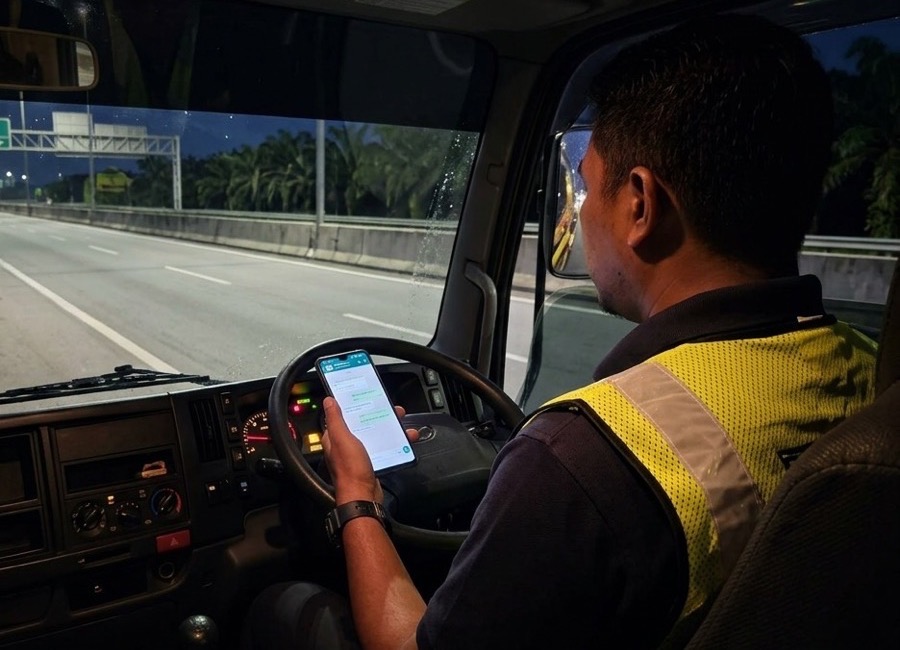
The efficient move: while you are waiting for the concession unit, WhatsApp us in parallel. Send the kilometre marker and direction, the vehicle type, and the final destination you want. The full price is confirmed in chat before any unit moves — so by the time your car reaches the toll plaza, the onward leg is already lined up and you are not stranded a second time.
- Use the concession hotline when: you are still inside the tolled zone, on the shoulder or in a lay-by.
- Use a private tow truck when: you are already out of the toll zone, or on an ordinary federal road.
- Use a private tow truck when: your destination is your own workshop or your house, not the concession's designated drop point.
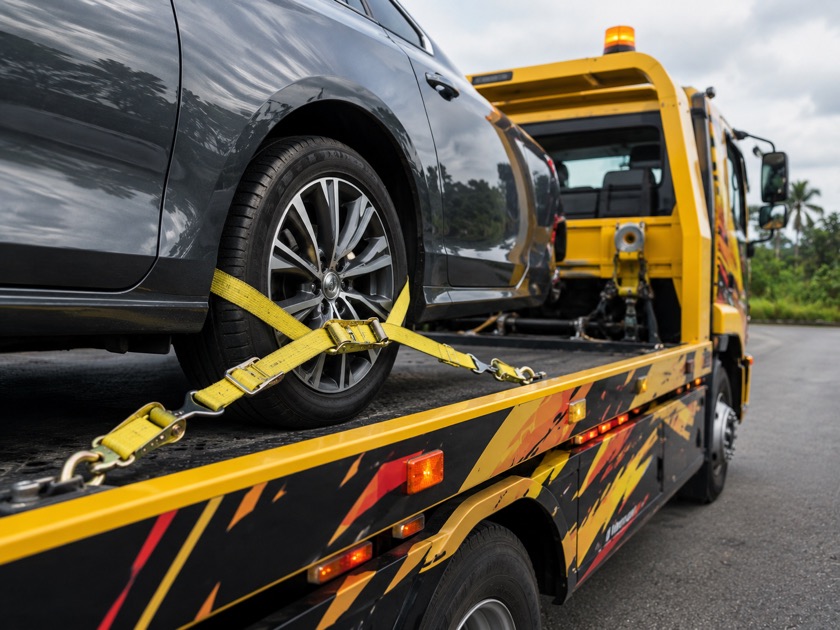
- Use a private tow truck when: the vehicle needs flatbed towing (EV, an automatic that cannot be put in neutral, a low-slung car).
- Use a private tow truck when: it is a motorcycle, a lori or a bus — the unit and the tonnage have to match.
- Use a private tow truck when: the vehicle has to be delivered to another state, not just off the highway.
After The Tow Truck Pulls You Out Of The Toll Zone — Where Does Your Car Go?
Plenty of drivers assume it is one tow straight to the workshop. It does not work that way.
The concession unit pulls the vehicle out of the highway zone to the nearest safe point — usually a toll plaza, a lay-by outside the toll, or a spot they designate. That is the whole scope. Your preferred workshop 40 km away in town? That is not part of that tow.
So once the car lands at the toll plaza, you are standing by the road at what might be 2 in the morning, with a car that cannot be left there for long. And the workshop is not open yet.
That is why the destination decision should be made early, while you are still waiting on the shoulder — not after the car is already sitting beside the plaza. Three common options: send it straight to your regular workshop (if it is open or can receive the vehicle), send it home and deal with it calmly in the morning, or send it to the panel workshop your insurer or takaful provider directs you to.
If the breakdown involved an accident, photograph the vehicle positions before anything is moved. That is basic evidence for the report and the claim later.
Car Towing From The Toll Plaza To Your Workshop Or Home
That second leg is our job. You set the destination, we haul it there — not to a yard of our choosing.
Car towing is priced by distance from pickup point to destination: from RM250 for deliveries under 50 km, from RM450 for under 100 km, and from RM550 for under 150 km. For lori and heavy vehicles, pricing follows tonnage — from RM450 for a 5-ton lorry, from RM550 for 10-ton, and from RM850 for 15-ton. These are starting rates; the final quote comes through on WhatsApp before any unit rolls, and the confirmed price is the price you pay.
Tell us the vehicle type upfront so the right unit is dispatched. EVs and automatics that cannot be released into neutral need flatbed towing, not a wheel-lift. Motorcycle towing means ratchet straps and a proper bike carrier for kapcai and superbikes alike. Lori and buses need a heavy-duty unit with rigging and winching done to SOP.
Highway breakdowns tend to happen far from home. A car that dies on the Tapah–Bidor stretch during a Kuala Lumpur to Penang run means a choice: drop it at a nearby workshop in Perak, or bring it back to your usual workshop in KL. Both can be arranged — interstate towing is core service for us, and the price is still confirmed before we set off.
One habit worth building: before a long drive, send the towing number to someone at home. If you are the one broken down, they can handle the calls while you focus on staying safe by the road.
Stranded Right Now? 24/7 Towing Standby Along The Whole Route
If you are reading this on the highway shoulder with your hazards on — make sure everybody is out of the car and behind the guardrail first. Then open WhatsApp.
Send three things only: live location or the kilometre marker plus your direction of travel, the vehicle type and what went wrong, and the final destination you want. We reply with the full price, you agree, the unit moves.
Abang Tow is on standby 24/7 across all 13 states of Peninsular Malaysia — including the middle of the night, weekends and public holidays. Save the number now. Better to have it and not need it than need it and not have it.