The Free Tow Truck Benefit In Your Insurance Policy — What You Actually Have
If your car sits on a comprehensive motor policy, chances are you already have a towing benefit — either built into the policy, or as the roadside assistance add-on you ticked at renewal. The problem is that most people only find out it exists after the car has already stopped by the roadside.
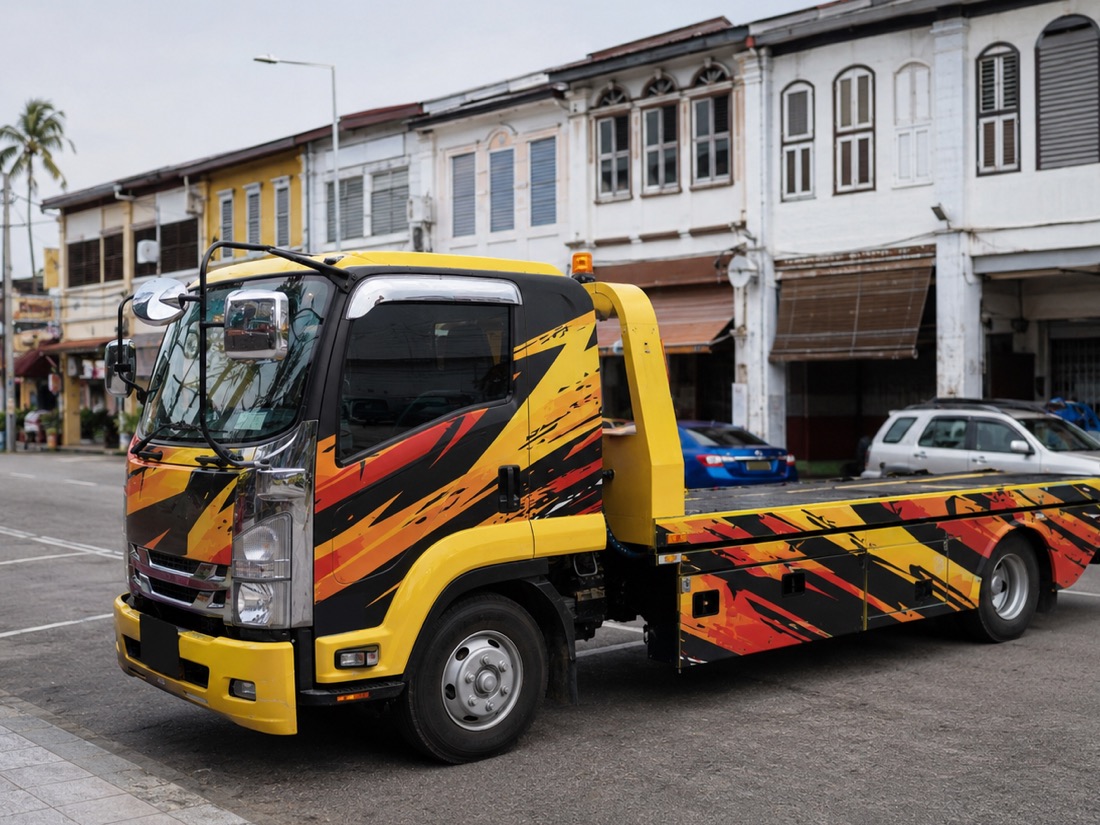
First thing to understand: the insurer rarely runs this benefit itself. It appoints an assistance provider (the panel), and that provider has a network of towing operators. That is why the number you need to dial is not the usual claims line — it is a separate 24 jam roadside assistance hotline.
The difference matters. The claims line handles paperwork after the fact. The assistance line is the one that actually sends a unit out to you that same night. Dial the wrong one and you burn precious minutes standing on the shoulder of a highway.
The scope is also wider than towing alone. Depending on the plan you bought, one call can cover several kinds of roadside help:
- Towing the car to the nearest panel workshop when it cannot move on its own
- Jump start when the battery is flat
- Tyre change using your own spare (they do not supply a new tyre)
- Emergency fuel delivery — just enough to reach the nearest station
- Lockout assistance when the keys are locked inside the car
Distance Caps And Call Limits On Insurance Towing Service
The word free in a policy never means without conditions. Every roadside assistance plan comes with limits written into your policy schedule — and those limits differ from policy to policy. Do not use your friend’s numbers as a reference; two people who bought cover in the same year can still be on very different caps.
Fastest way to check: open your policy document, find the roadside assistance section, and read the radius figure and the number of calls allowed. Screenshot that page and keep it in your phone gallery. At 3am on the shoulder of a highway, you will not be in the mood to scroll through a forty-page PDF.
If you drive long distance a lot — balik kampung across state lines, or work that takes you out of your usual area — the distance cap is the one that breaks first. Long trips mean the breakdown tends to happen far from any of your panel workshops.
Four limits show up most often in local plans:
- Distance cap — the tow is covered only up to a set radius from where the car broke down. Anything beyond that, you pay the excess yourself.
- Call limit — how many times the benefit can be used within one policy period. Once the quota is used up, the next call is out of your own pocket.
- Destination limit — many plans only deliver to the nearest panel workshop, not the workshop you prefer.
- Vehicle limit — the plan is normally tied to one registration number and to private vehicle classes.
How To Activate 24/7 Roadside Assistance — The Call Order, Step By Step
The order matters. Plenty of people call the first tow truck they find on Google, then remember the insurance benefit halfway through. By then the benefit is off the table, because the job was not carried out by an appointed panel operator.
The other step people skip most often is confirming the destination before hanging up. Ask early, or your car can end up at a panel workshop that is nowhere near convenient for you — and the second transfer after that is definitely on you.
Work through this sequence from the moment the car stops:
- Get yourself safe first. Hazard lights on, exit through the left-hand door if you are on a highway, and wait behind the guardrail — not inside the car, not on the shoulder.
- Put the warning triangle behind the vehicle, far enough back that oncoming traffic sees it early.
- Find the roadside assistance hotline number. It is usually printed on the insurance certificate, on the assistance card, or sitting inside your policy provider’s official app.
- Gather the basics before dialling (full list in the next section) so the call does not stall while you hunt for your policy number.
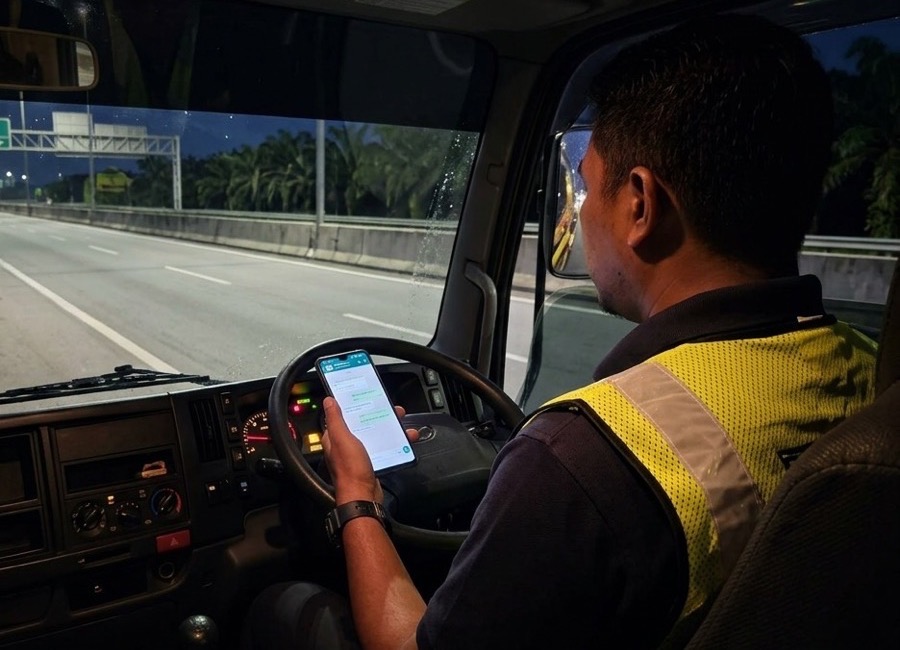
- Dial the hotline. Give your policy number, vehicle registration number and your exact location.
- Confirm two things before you hang up: how much distance is covered, and which workshop the car is going to.
- Ask for a reference or job number, plus the name of the towing company being sent.
- When the tow truck arrives, match the job number, photograph the car from all four corners before it is lifted, and keep a copy of the form or receipt.
Information Checklist Before You Call A Car Towing Or Flatbed Towing Operator
Panel operators ask the same questions every single time. Have the answers ready and the call stays short and the unit gets dispatched straight away, instead of stalling while you dig through the glove compartment.
The same details are what any private towing operator will ask for too, so none of this is wasted effort. We have laid out a print-and-keep version in the information checklist before you call a tow truck — read it once, screenshot it, and park it in your phone gallery next to the photo of your policy.
Panel line engaged, or your case looks like it might not qualify? WhatsApp Abang Tow directly — send your live location, vehicle type and what went wrong. Price is confirmed in the chat first, then the unit moves. Standby 24 jam, across the Peninsula.
Here is what should be at your fingertips before you dial:
- Insurance policy number and expiry date
- Registration number, make and model of the vehicle
- Exact location — road or highway name, direction of travel, nearest KM marker, R&R or the exit you just passed
- What happened — engine died, overheated, tyre blowout, accident, or the car will not go into gear
- Whether the wheels still turn, and whether the car can be put into neutral
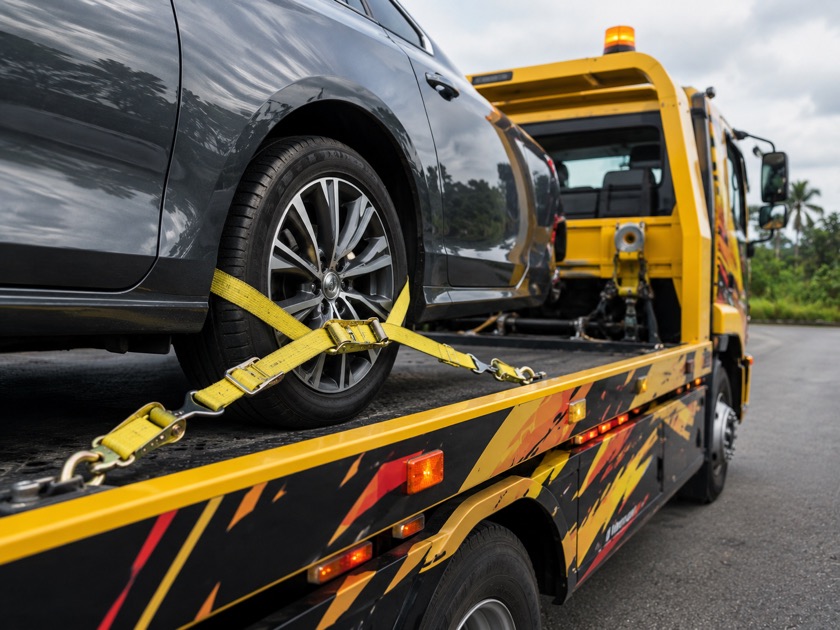
- Auto, manual or EV — this is what decides whether a flatbed is needed
- The workshop or destination you want it delivered to
- A contactable phone number, and how much battery your phone has left
When The Free Benefit Does Not Apply — Motorcycle Towing, Lorry Towing And Recovery Cases
This is the part that causes the most roadside arguments. Not every situation qualifies, and the panel operator has no discretion to approve anything on the spot — they follow the policy terms, full stop.
The other common question: does using this benefit affect your NCD. Roadside assistance is normally handled separately from a damage repair claim, so on its own it is not a claim. But terms differ between providers — confirm with your policy provider before assuming anything.
Situations that typically fall outside a roadside assistance plan:
- Third party or third party fire and theft policies — this benefit usually comes with comprehensive cover or a paid add-on only.
- Commercial vehicles — lori, goods vans and heavy vehicles generally sit outside a private roadside assistance plan.
- Flooded cars. Pulling a vehicle out of water counts as recovery work, not a standard tow.
- Off-road incidents — a car stuck in a drain, soft ground, a construction site or down a slope. Winching is specialist work.
- Vehicles without valid road tax or valid cover at the time of the incident.
- Vehicles modified so low that clearance becomes a problem, or that need equipment the panel unit does not carry.
- Cases where the call quota for that policy period has simply run out.
Excess Distance Charges — How To Work Out Your Share Of The Tow Truck Bill
When the actual distance goes past the policy cap, the benefit does not just get cancelled. What happens is that the portion within the cap is covered by the policy, and the excess portion you pay yourself — usually straight to the tow truck driver at the destination.
As a comparison reference, our own distance tiers start from RM250 for delivery under 50 km, from RM450 for under 100 km, and from RM550 for under 150 km. Those are full-trip rates, not excess rates. There are cases where the excess you end up paying lands close to what one full self-booked trip would have cost — except that when you book it yourself, you are the one choosing the destination.
If you want to see both options side by side in more detail, there is a fuller breakdown in our notes on insurance towing versus booking your own.
How to work out the numbers so nothing surprises you at the workshop:
- Check the distance cap in your policy schedule — that is your baseline figure.
- Get the real distance from where the car is to the destination you actually want, not to the panel workshop.
- Subtract the cap from the real distance. What is left is the mileage you are paying for.
- Ask the operator what the excess rate is per kilometre, and ask for the full ringgit total in writing over message.
- Ask as well whether there are extra charges for night hours, tolls, or winching.
- Compare that ringgit total against booking a private tow direct for the whole trip.
When Booking A Private Tow Truck Direct Is Faster — Including Interstate Towing
The insurance benefit is worth using when your case is clean — private car, within the distance cap, and the panel workshop actually works for you. Outside of that, booking direct is usually faster and easier to control, because you set the destination and the type of unit yourself.
The smartest move is honestly quite simple: call the panel line first, ask about the cap and the destination, and if the answer does not suit your situation — book direct instead. You lose nothing by asking, and you end up with two prices to compare.
You can also prepare before anything goes wrong: keep one 24 jam towing number saved in your phone right next to the insurance hotline. If you do most of your driving around the Klang Valley, check our Selangor towing coverage for the areas we run, or see the full list of our car, motorcycle and lorry towing service.
Stuck right now with no time to read policy terms? WhatsApp Abang Tow — send your location, confirm the price, unit moves. Cars, motorcycles and lori, across Peninsular Malaysia, 24 jam.
Situations where booking it yourself is usually the better call:
- You want the car delivered to a workshop you actually trust, not the nearest panel one.
- The distance is well past your policy cap, especially interstate towing across state lines.
- Commercial vehicles — 5-ton, 10-ton or 15-ton lori that sit outside a private plan entirely.
- EVs, autos that cannot be put into neutral, or lowered cars that need a flatbed.
- Your annual quota is used up, or your policy is third party only.
- Flood, drain, soft ground or anything else that needs winching.
- You need to move now and cannot wait out the panel verification process.