Short Answer — Yes, But Towing a Trailer Is Not the Same as Car Towing
Short answer: yes, a private vehicle in Malaysia can pull a trailer. But "can" here does not mean hook it up and go.
Three things have to be right at the same time. Get one wrong and it is not only a summons you are risking — you are carrying that risk onto a road everybody else is using too.
And there is one distinction people mix up constantly: pulling a loaded trailer (a boat, a jetski, a bike, cargo) is a completely different job from moving a vehicle that has broken down. A car with a dead engine has no brake assist, no power steering, and often will not go into neutral. That is not "a load" — that is car towing work, and it has its own equipment.
- The trailer itself is legal — registered, carrying its own registration number, not a workshop-built unit that never made it into any record.
- Your tow vehicle is genuinely rated for that load — an official figure from the manufacturer, not a number somebody quoted in a Facebook group.
- Coupling, safety chains, lights and brakes all work — all of them, not most of them.
Trailer Registration and Licence Class — What JPJ Wants Before Any Towing Job
In Malaysia a trailer is not an accessory. A trailer used on public roads has to be registered with JPJ and carry its own registration number. An unregistered trailer — small, rarely used, does not matter — has no place on a public road, and your insurance has nothing to stand on if there is an accident.
Home-built or modified trailers usually have to pass a Puspakom inspection before they can be registered. This is the step that gets skipped most often. People get the trailer built at a workshop, paint it nicely, start using it — and only when they get stopped do they realise there is not a single record in their name.
Driving licence class depends on the combined weight of the tow vehicle and the trailer, not on the size of your car alone. The licence you hold for your daily drive does not automatically qualify you to pull whatever you like behind it.
Do not take this part from a WhatsApp group. Registration requirements and licence class are set by JPJ based on the weight and type of trailer — bring your trailer’s actual specs to the JPJ counter and ask directly. Ten minutes at the counter is cheaper than one summons plus one tow.
One more thing: fitting a tow bar or hitch counts as a vehicle modification. Some workshops will bolt one on without asking a single question. That does not make it approved. Check the modification status before you pay, not after.
Towing Capacity and Weight Limits — Check Before You Need a Tow Truck
Every vehicle has a limit. The problem is that most drivers have never once looked at theirs.
The first place to check is the owner’s manual. Manufacturers usually state the maximum towable weight as two separate figures — one for a trailer with its own brakes, one for a trailer without. The unbraked figure is always far lower, and it is the one that matters most for small private trailers.
The second place is the vehicle grant (VOC) and the spec plate on the door pillar. That is where BTM (unladen weight) and BDM (laden weight) sit. Those two numbers decide how much weight allowance is actually left once passengers, a full tank and everything in the boot are counted — not how much is left when the car is empty.
Malaysian reality: plenty of passenger cars sold here come with no official towing rating for the local market at all. If the manufacturer states nothing, you have no basis to claim the car can pull so-many kilograms. That is an assumption, not a spec.
Small cars and CVT cars are the most exposed. That kind of gearbox is designed for the weight of the car itself — not the car plus a trailer plus a load, climbing, in the middle of a Malaysian afternoon.
If you cannot find these figures, or you are honestly not sure whether your model has a towing rating at all — do not guess on a road full of other people’s cars. WhatsApp Abang Tow, tell us the vehicle type and destination, and the price is confirmed in chat before the unit moves.
Trailer Technical Checklist — What a Towing Service Crew Checks Every Time
Professional towing service crews have one habit worth copying: they check the same things, every single time, no matter how many hundreds of times they have done the job. Not because they forget — because one pin that is not seated fully is enough to drop a load in the middle of a highway.
Run this before every trip, in order:
- Coupling seated fully over the tow ball and the latch locked — shake it hard by hand and it should not lift at all.
- Safety chains crossed under the drawbar and connected to the tow vehicle — if the coupling lets go, the chains are what stop the drawbar from kissing the tarmac.
- Every light tested with a second person watching: tail lights, brake lights, left signal, right signal, number plate light.
- Trailer number plate fitted, clean and readable from behind.
- Trailer tyre pressure checked while the tyres are cold — including the spare, if there is one.
- Wheel nuts torqued to spec, then re-checked after the first stretch of the journey.
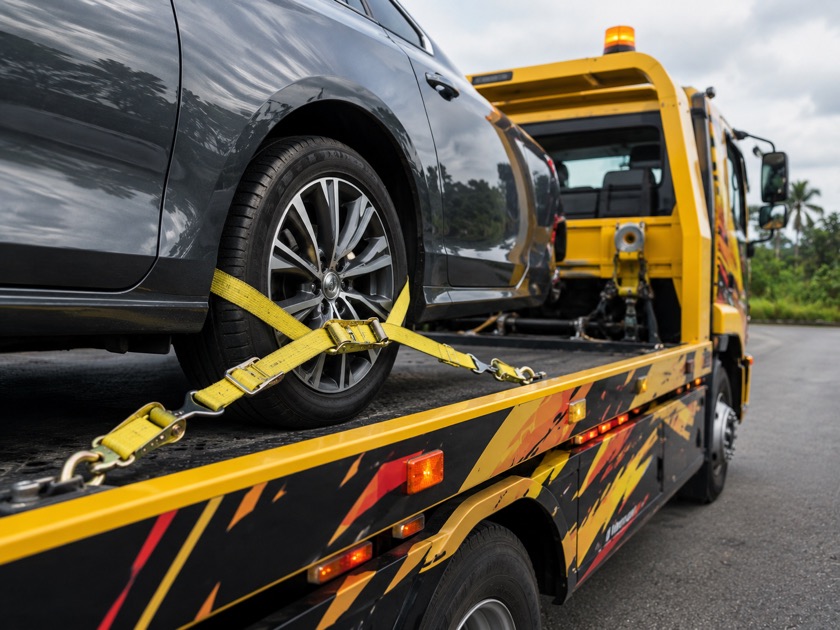
- The load strapped down to the trailer, not just placed on it — ratchet straps, not bungee cords.
- Weight distributed properly: most of the load ahead of the trailer axle so the drawbar presses down, not lifts up.
- Side mirrors giving you a view past the full width of the trailer — if you cannot see past it, fit extension mirrors.
- Trailer brakes (if fitted) tested gently in a quiet area before you join the main road.
Common Risks of Towing It Yourself — Why Drivers End Up Calling Roadside Assistance
Trailer sway — the trailer starts swinging left and right, and every swing comes back harder than the last. Usual causes: the load sitting too far back, speed past what the coupling is comfortable with, or the air punch when a lori overtakes you on the PLUS highway. A driver’s first instinct is to brake hard and steer against the swing, and that is exactly what makes it worse. What actually works: ease off the throttle, hold the wheel straight, let it settle, then pull into the next R&R or lay-by and redistribute the load.
Hot brakes — extra weight means a longer stopping distance, and long descents like Karak, Genting or the Cameron Highlands run genuinely punish an ordinary car’s brakes. A burning smell and a pedal that has gone soft are the last warning, not the first. Drop a gear early and stop riding the brakes all the way down.
Gearbox and engine — automatics and CVTs heat up fastest when they are dragging a load uphill. This kind of damage rarely shows up on the same day. It builds quietly, then arrives as a workshop bill far bigger than the transport cost you were trying to save.
Suspension and lights — the rear of the car squats, the headlights tilt up into oncoming drivers’ eyes, and the front tyres lose part of the grip you steer with. You may not notice any of it until you have to swerve for something.
Speed — a vehicle pulling a trailer should not be driven at the same rhythm as an empty car. Treat this as your own rule even where no sign says so: a bit slower, more gap, less drama.
When Flatbed Towing, Motorcycle Towing or Lorry Towing Beats Doing It Yourself
Some situations have nothing to do with driving skill. They are about having the right equipment.
- A broken-down vehicle — dead engine, no brake assist, locked steering, or a gearbox that will not go into neutral. A car in that state cannot be roped along or loaded onto a small trailer safely.
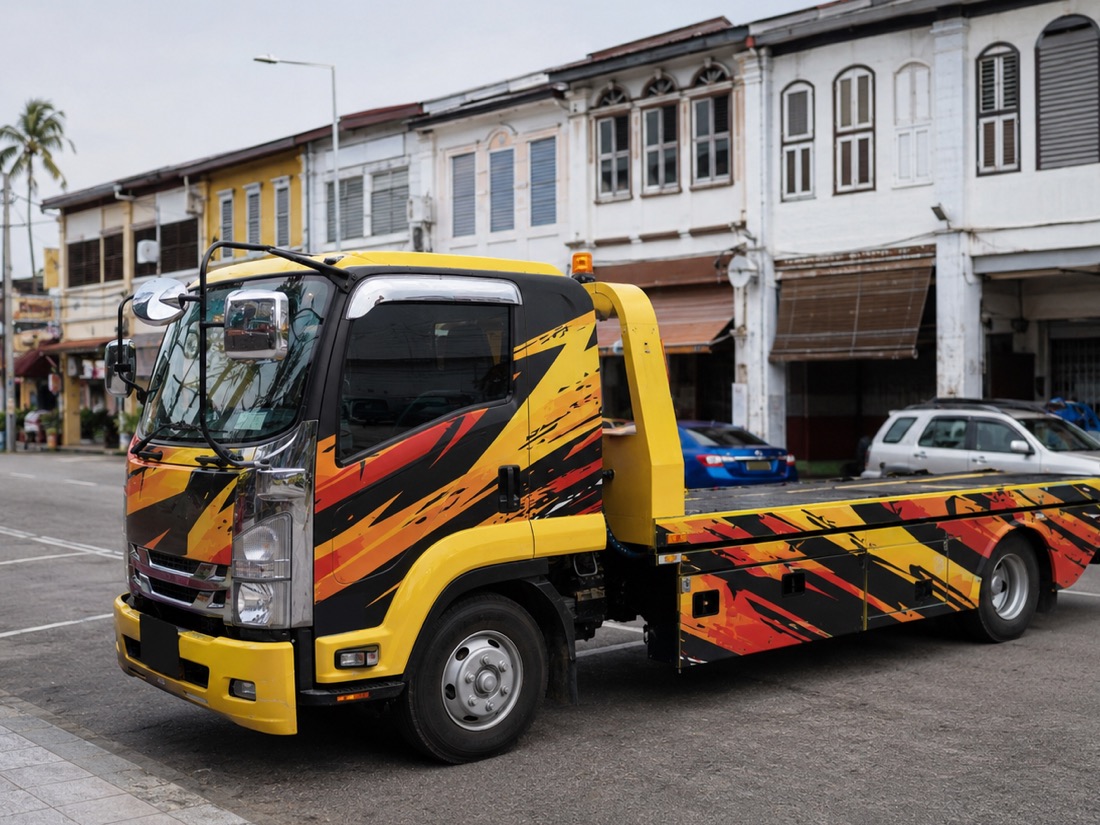
- Automatics, AWD and EVs — the wheels need to be completely off the road. Flatbed towing is the default choice for these.
- Vehicles without valid road tax, insurance or registration — they cannot move on their own wheels on a public road. Carried as cargo, that is a different story.
- Long interstate distances — driving hundreds of kilometres with a load behind you, stressed and already tired, is the combination that most often causes the second accident.
- Hilly, steep routes — Karak, Genting, Cameron Highlands, the Titiwangsa range roads. Long descents punish a private car’s brakes far faster than people expect.
- Motorcycles and superbikes — the wrong strapping can bend the front forks, and that repair costs more than motorcycle towing ever would.
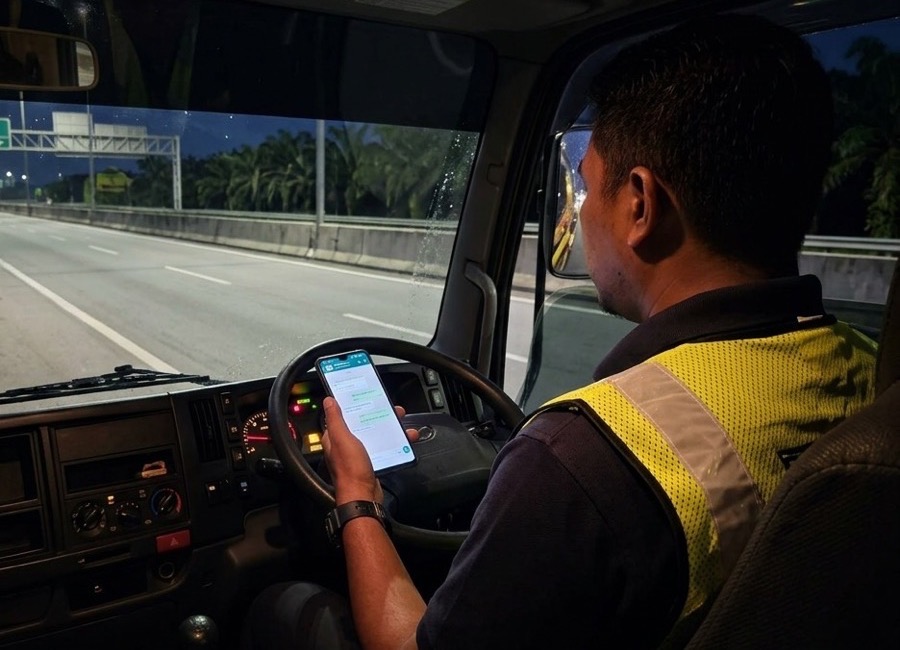
- Bad weather or night runs — low visibility plus a trailer you are not used to pulling is not a combination worth testing.
- Anything in the commercial class — a loaded lori, machinery or a heavy build. Lorry towing is matched to tonnage (5, 10 or 15 tonne class units), and no private car belongs anywhere near that job.
The Smart Move Before You Set Off — 24 Hour Towing Service and Interstate Towing as Backup
Flatbed versus wheel-lift is not a matter of taste — it decides whether your vehicle’s wheels touch the road at all for the entire trip. For automatics, EVs and anything that will not go into neutral, that difference decides whether you arrive with the same car, or the same car plus a transmission bill.
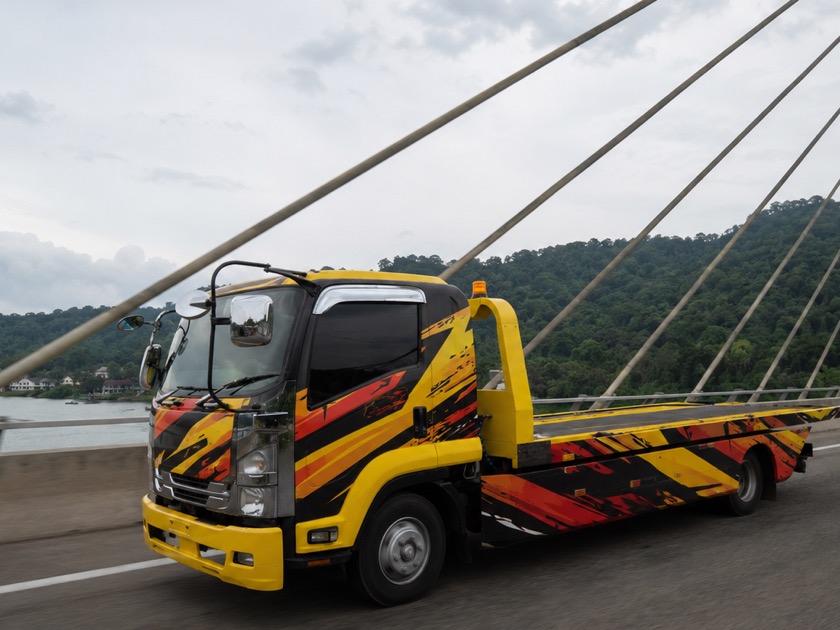
For sending a vehicle across state lines there is a tidier option than driving it yourself with a load behind you: the vehicle gets carried, and you choose whether to follow or not. Hill routes like Karak and the LPT heading into Pahang are among the ones that test a first-timer’s brakes hardest.
And if you are still unsure after reading all this — the hesitation itself is already the answer. Send your location and vehicle type on WhatsApp and we will give you the full price before the unit moves. Standby 24 hours, across the whole Peninsular. A trailer cannot sway if your car is riding on a flatbed.